
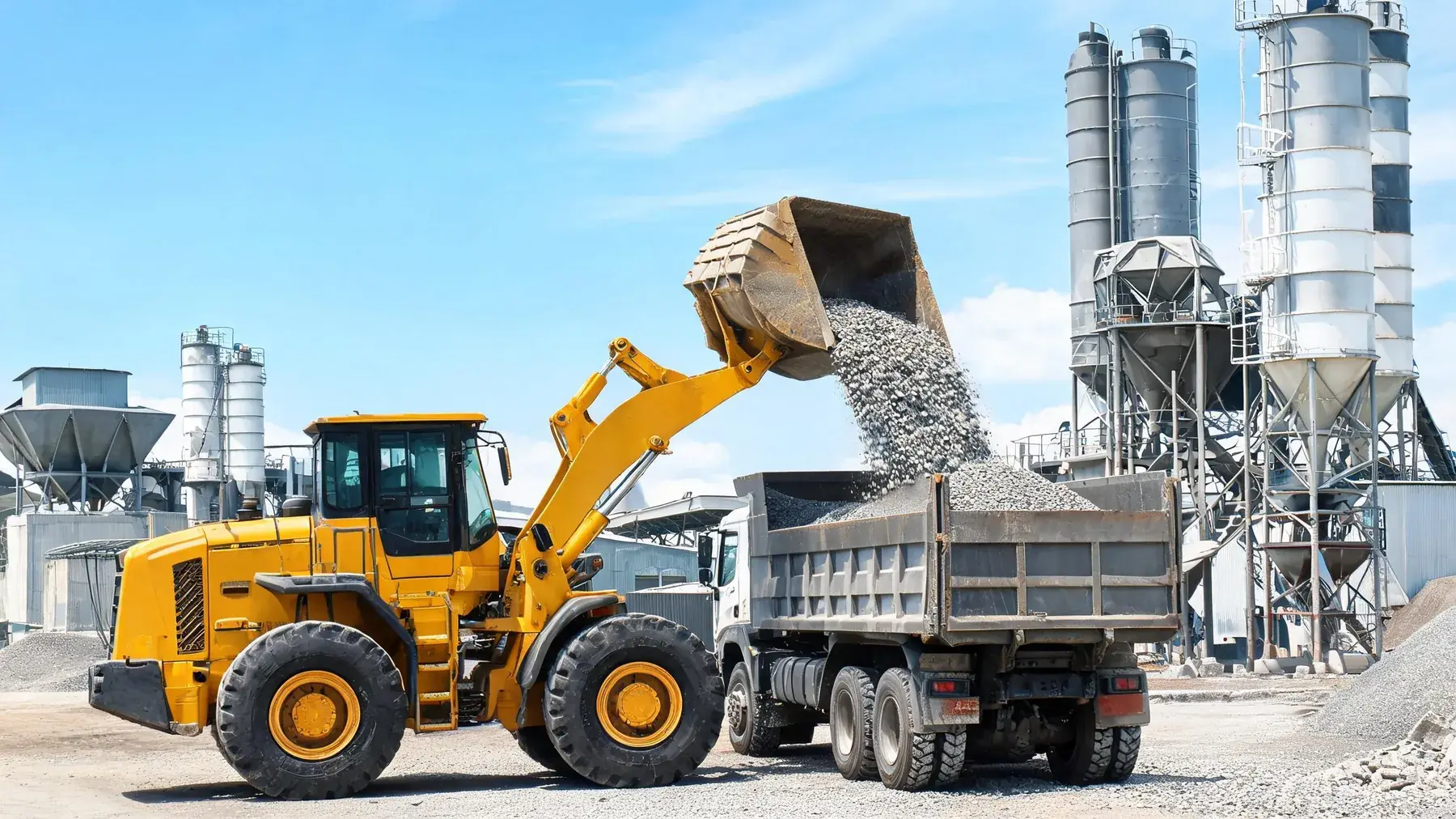
How to Choose the Right Wheel Loader Tonnage: 3 t, 3.5 t, 5 t or 5.5 t
Rated load on the brochure is only half the decision. Bucket size, material density, truck matching and site access decide whether a 3 t or a 5.5 t loader actually earns money.
Most first-time buyers choose a wheel loader by the number on the side of the machine. That is the fastest way to buy the wrong one. A 5 t loader with the wrong bucket moves less material per hour than a 3.5 t loader with the right one, and it burns 40% more fuel doing it.
This guide explains how rated load, bucket capacity, material density, truck size and site access work together — and which of the XCMG 3 t to 5.5 t machines fits each job.
Why tonnage is a system, not a number
Rated load is the mass the loader is designed to carry at normal operating speed with a standard bucket. It is not the same as the maximum tipping load, and it is not the same as what the machine can physically lift. A 5,500 kg rated loader will have a tipping load around 9,000–11,000 kg depending on articulation angle and bucket position.
Three numbers have to line up:
- Rated load — what the machine is designed to carry all shift, not once.
- Bucket capacity — the volume, which only converts to mass when you know the material density.
- Cycle time — how many buckets per hour, which depends on travel distance and stockpile height.
A loader that is correctly matched runs at 70–85% of its tipping load in normal work. If you routinely see the rear axle light or the machine rocking at full turn, the bucket is too big for the material.
The four working classes
| Class | Typical models | Bucket | Best for |
|---|---|---|---|
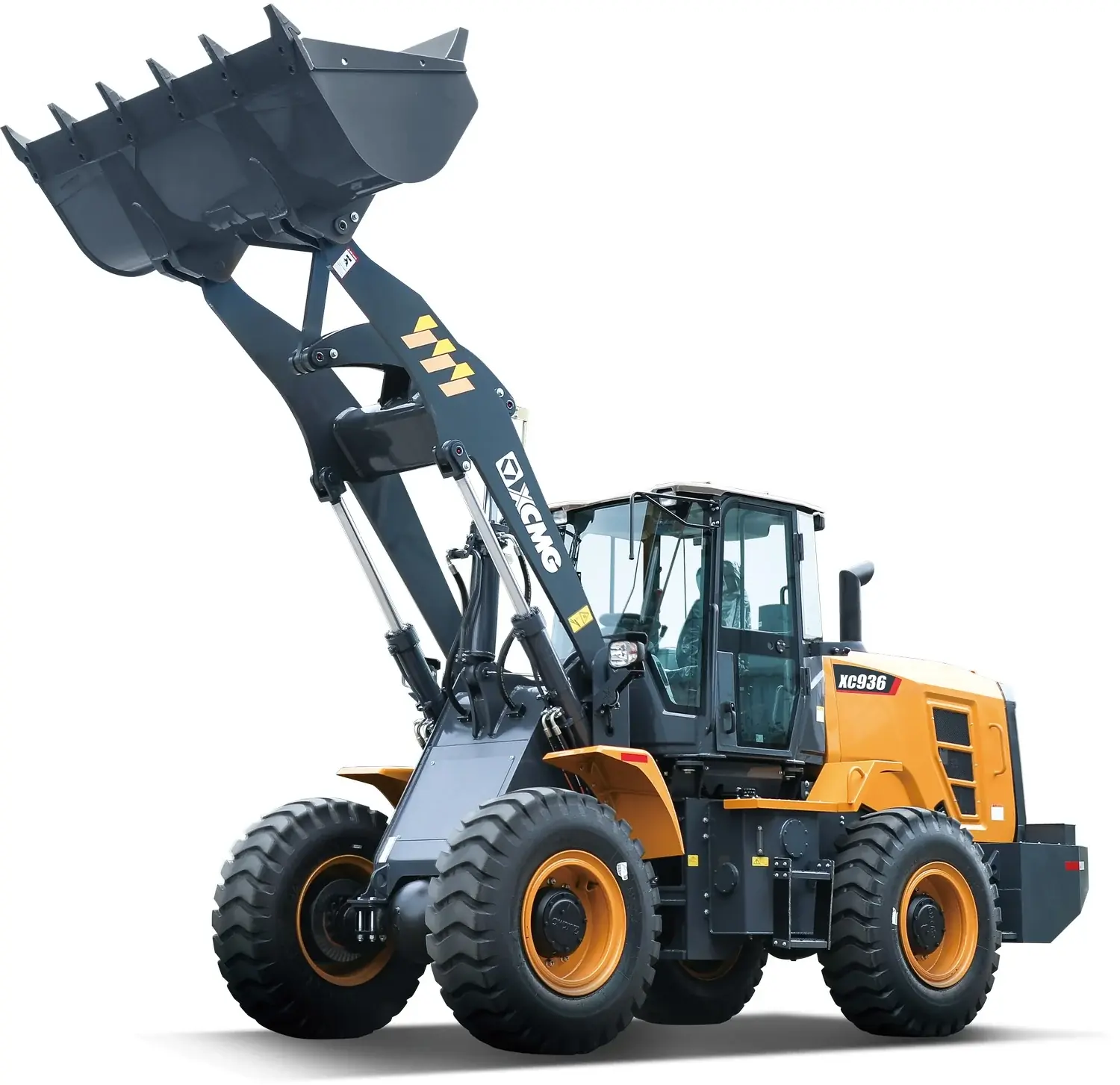
| 3 t compact | XC936, LW300KN | 1.5–2.5 m³ | Yards, farms, municipal work, tight sites, 15–20 t trucks |
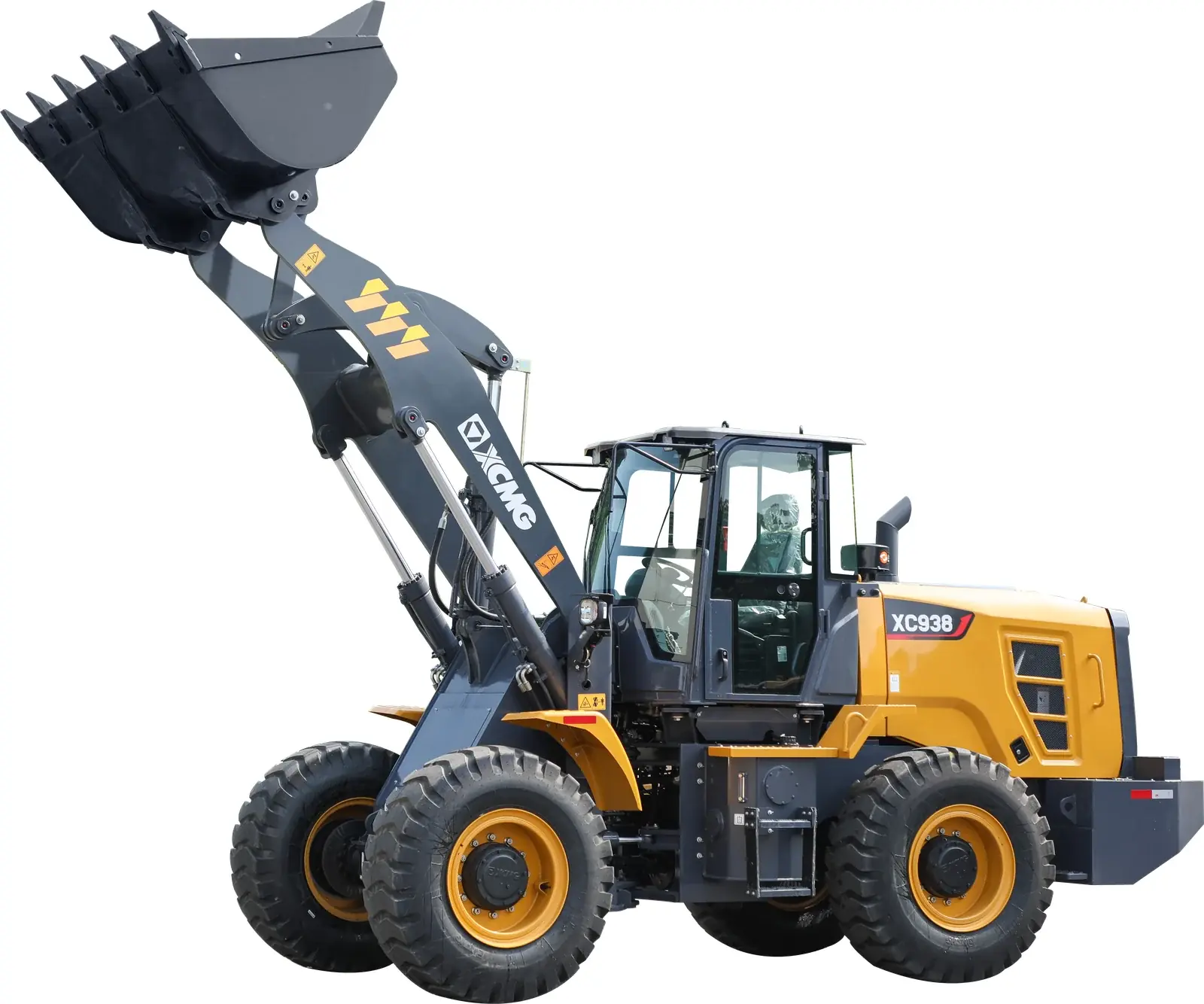
| 3.5 t | XC938 | 1.8–3.0 m³ | Aggregate yards, ready-mix plants, general construction |
| 5 t | ZL50GN | 2.5–4.5 m³ | Sand and gravel, coal, earthmoving, 20–30 t trucks |
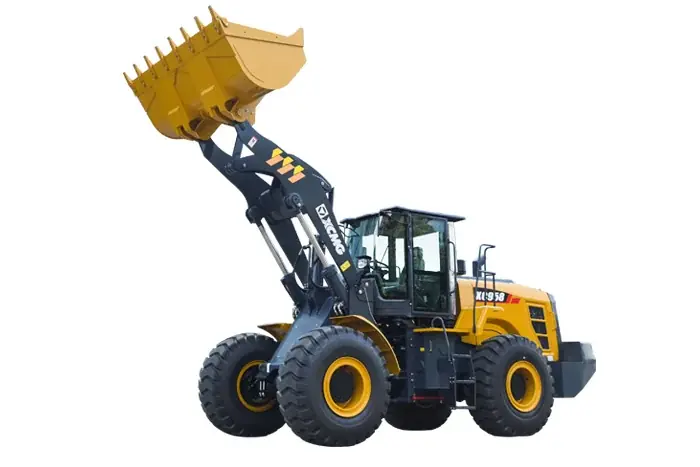
| 5.5 t high output | XC958 | 3.0–3.2 m³ | Quarry faces, ports, coal yards, 30–40 t trucks |
The step from 3 t to 3.5 t is mostly about stability and breakout force. The step from 5 t to 5.5 t is about hydraulic output and duty cycle — the XC958 lifts faster and runs a bigger pump for continuous quarry loading.
Match the bucket to the material
Bucket capacity is volume; rated load is mass. The bridge between them is bulk density:
| Material | Bulk density | 3.2 m³ bucket carries |
|---|---|---|
| Dry sand | 1.4–1.6 t/m³ | 4.5–5.1 t |
| Gravel, 20–40 mm | 1.5–1.7 t/m³ | 4.8–5.4 t |
| Crushed stone | 1.6–1.9 t/m³ | 5.1–6.1 t |
| Wet aggregate | 1.9–2.1 t/m³ | 6.1–6.7 t |
| Coal | 0.8–1.0 t/m³ | 2.6–3.2 t |
| Grain | 0.6–0.8 t/m³ | 1.9–2.6 t |
This is why a 3.2 m³ bucket on a 5.5 t loader is correct for dry sand and wrong for wet crushed stone. For dense material you either reduce the bucket or accept a lower fill factor and slower cycles. For light material such as coal, grain or biomass you can go up to a 4.5–5.0 m³ bucket on the same machine, provided the linkage and hydraulics are specified for it.
Rule of thumb: if the bucket is more than 20% oversized for the material, you lose more in cycle time and tyre wear than you gain in volume.
Match the loader to your trucks
The loader exists to fill a truck. A common mistake is buying a loader that fills the truck in two passes — the operator spends the day waiting for the next truck instead of loading.
- 3–3.5 t loader: 3–4 passes for a 15–20 t tipper. Good match for small fleets and rental work.
- 5 t loader: 4–5 passes for a 25–30 t tipper. The standard earthmoving combination.
- 5.5 t loader: 4–5 passes for a 30–40 t tipper, or 6–7 for a 40 t articulated truck in a quarry.
Bucket fill also depends on stockpile height. A loader working a 4 m stockpile fills faster than one working a flat pad, because the operator can use gravity instead of hydraulic force.
Site width, turning radius and transport
Three physical limits are often forgotten until the machine arrives:
- Width. A 3 t loader is around 2.3–2.5 m wide; a 5.5 t loader is close to 3.0 m. If your yard gate or internal road is narrower, the big machine simply does not fit.
- Turning radius. Articulated loaders turn tight, but a 3.35 m wheelbase machine still needs roughly 6.5 m of clear width to turn safely at speed.
- Transport. A 3–3.5 t loader travels on a standard low-bed or can be shipped two per 40 ft flat rack. A 5.5 t machine is normally one per 40 ft flat rack with the bucket and tyres removed.
If the machine has to move between sites weekly, transport cost can outweigh the extra productivity of the larger class. In that case a 3.5 t loader on a 3-axle low-bed is often the cheaper system.
What we recommend
For a first loader in a mixed contracting business, the XC938 3.5 t is the safest choice: 1.8–3.0 m³ bucket range, 125 kN breakout force and a 2,900 mm wheelbase that still fits inside a normal yard.
For sand, gravel and earthmoving with 25–30 t trucks, go to the ZL50GN 5 t — simple, proven and cheap to keep running. If the machine will spend its life at a quarry face or port handling 30–40 t trucks, the XC958 5.5 t pays back the price difference in the first year through cycle time and hydraulic output.
Tell us your material, density and truck size and we will size the bucket and linkage for you before you commit.
Quick answers
Only within the linkage and hydraulic limits set by the manufacturer. A larger bucket increases load moment and can overload the front axle, tyres and boom. For light material it is often possible with a factory-approved bucket; for dense aggregate it is not.
If the yard is narrower than about 3.2 m at the pinch points, yes. A 5 t loader is roughly 3.0 m wide with standard tyres and needs clear space to articulate. A 3.5 t machine is usually the practical maximum for urban yards.
Related models
Need this sized for your site?
Send the material, truck size and destination port. We will recommend the model and configuration in writing.