
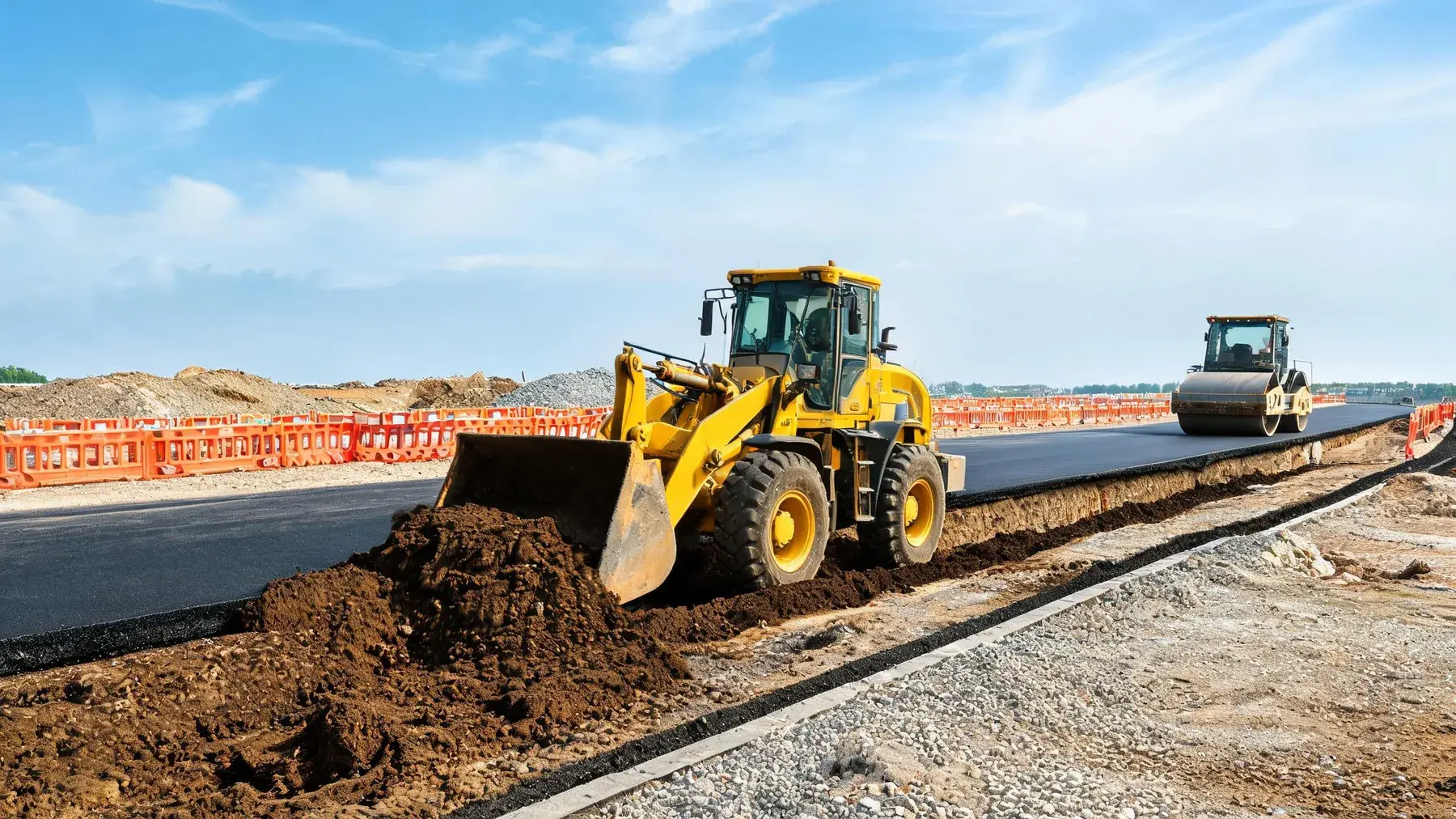
Shipping an Excavator or Wheel Loader from China: Container, Flat Rack or Break Bulk?
Most machine shipping problems start with the wrong loading method, not the wrong price. A practical breakdown of containers, flat racks, break bulk and documents.
Buying the machine is the easy part. Getting it to your yard undamaged, with the right documents and no surprise port charges, is where most of the risk sits. The loading method should be chosen before the machine is ordered, because it determines whether the bucket, tyres and arm can stay on.
Three ways to ship a machine
1. Flat rack container
The most common method for excavators up to about 25 t and loaders up to 5.5 t. The machine sits on a 20 ft or 40 ft flat rack, is lashed to the deck, and the rack is shipped on a container vessel. It is fast, scheduled and relatively cheap per unit for one machine.
2. Standard container (disassembled)
Small machines — mini excavators, 3 t loaders, backhoe loaders — can be shipped inside a 40 ft high-cube with the cab or canopy lowered and the bucket removed. Two 3 t loaders can sometimes fit in one 40 ft flat rack, and a 3 t loader can fit in a 40 ft HC in some configurations. This is the cheapest per unit when volumes allow.
3. Break bulk
Large excavators (30 t and above), machines with long arms, and multi-unit orders. The machine is lifted onto a general cargo vessel and secured on deck or in the hold. Cheaper per tonne for large units, but sailing schedules are less frequent and port handling varies.
What fits where
| Machine | Weight | Typical loading |
|---|---|---|
| XE75GA 7.5 t excavator | 7,700 kg | 40 ft HC container or 20 ft flat rack |
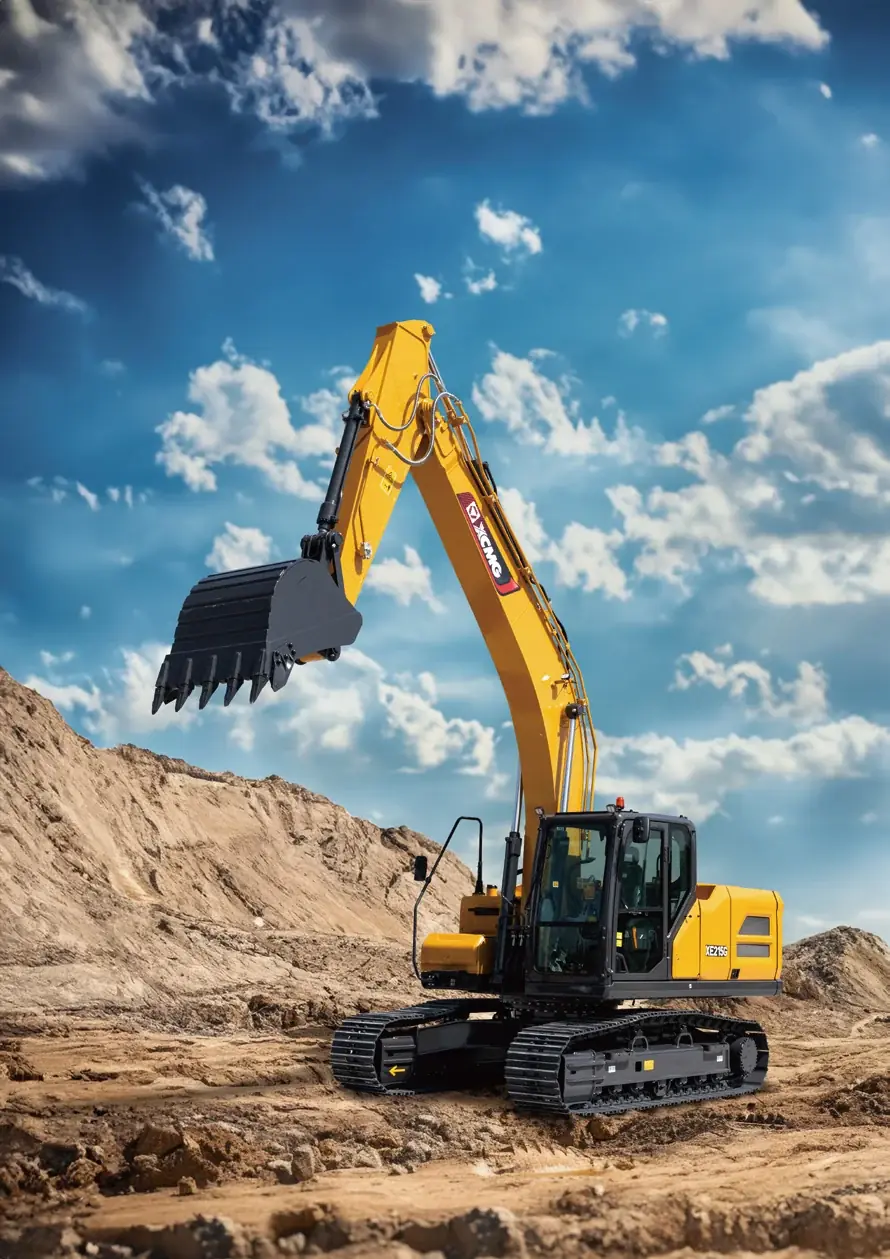
| XE215G 21.5 t excavator | 21,500 kg | 1–2 per 40 ft flat rack, boom removed |
| XE370G 37 t excavator | 36,860 kg | Break bulk or 40 ft flat rack with arm removed |
| XC936 / LW300KN 3 t loader | ~10,300–10,900 kg | 40 ft HC or 2 per 40 ft flat rack |
| XC938 3.5 t loader | 10,400 kg | 40 ft HC or 40 ft flat rack |
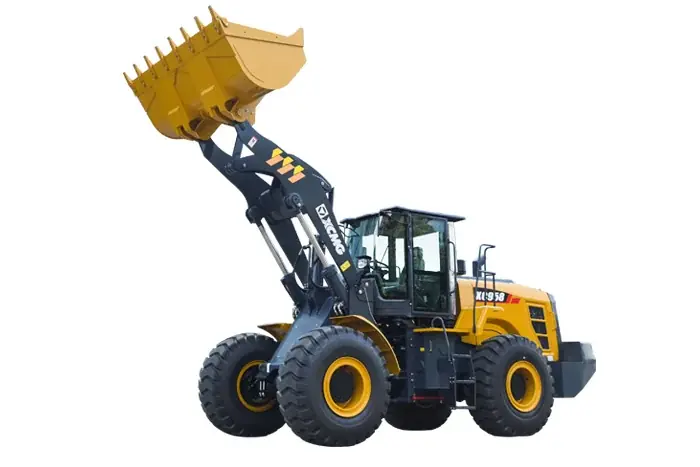
| XC958 5.5 t loader | 16,950 kg | 1 per 40 ft flat rack, bucket and tyres off |
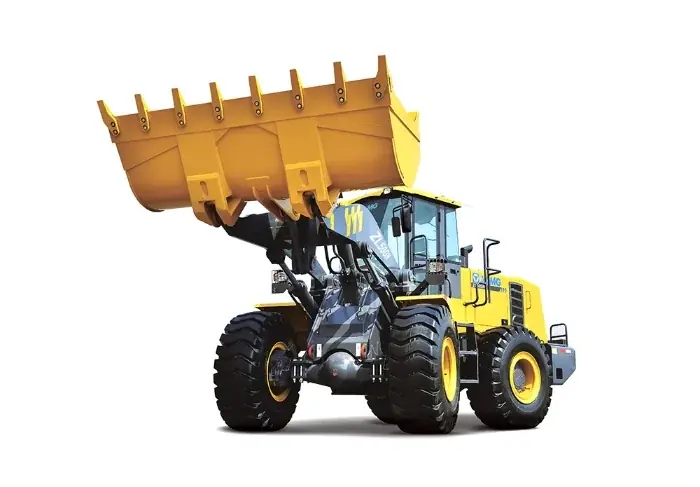
| ZL50GN 5 t loader | 17,300 kg | 1 per 40 ft flat rack |
| XC8-C2570 backhoe | 7,600 kg | 40 ft HC or 40 ft flat rack |
These are typical arrangements, not fixed rules. Arm length, bucket width, tyre size and whether a canopy or cab is fitted all change the fit. We confirm the exact configuration against the vessel's flat rack dimensions before booking.
Documents you need
- Commercial invoice — machine, configuration, unit price, Incoterm.
- Packing list — dimensions, gross and net weight, number of packages.
- Bill of lading — issued by the carrier after loading.
- Certificate of origin — normally issued by CCPIT; needed for preferential duty in some markets.
- Fumigation certificate — for wooden packing and dunnage, required by many African and Middle Eastern ports.
- Insurance certificate — marine cargo cover, usually 110% of CIF value.
- Product documents — operation manual, parts book, engine manual, warranty statement.
Missing a fumigation certificate or a certificate of origin is the most common cause of port delay. We prepare the full set before the machine leaves Xuzhou and send scanned copies for your clearance agent to review.
Loading and securing
A machine that moves on the rack arrives with bent guards and cracked glass. Standard practice:
- Bucket lowered onto the deck and blocked with timber.
- Four-point lashing with chain or web slings rated to at least twice the machine weight.
- Wheels chocked front and rear; parking brake released so the machine sits on the chocks, not the brake.
- Battery isolated, fuel at the level required by the carrier, and all loose items removed from the cab.
- Photos of the securing arrangement taken before the container is closed.
Ask for the loading photos. They are your evidence if damage occurs in transit.
What to check on arrival
- Photograph the seals and the rack before opening.
- Check lashings and chocks for movement.
- Inspect glass, mirrors, lights, guards and hydraulic cylinders.
- Check engine oil, coolant and hydraulic oil levels before first start.
- Record any damage with the port or warehouse before signing the delivery note.
Marine insurance claims depend on documenting damage at the point of delivery, not a week later in your yard.
What drives the freight cost
Freight is priced on volume, weight and route, not on machine price. The main variables are:
- Port pair — Shanghai or Qingdao to Mombasa, Dar es Salaam, Lagos, Jebel Ali or Alexandria.
- Loading method — flat rack rates move with container rates; break bulk is quoted per tonne or per cubic metre.
- Dimensions after disassembly — removing the arm or bucket can cut the billable volume significantly.
- Season — rates peak before major holidays and during congestion events.
- Destination charges — THC, documentation, storage and inland haulage are usually on the buyer's account unless quoted DAP.
Send us the destination port and we will quote FOB, CFR and CIF so you can compare against your own forwarder.
Quick answers
Sometimes. Two 3 t loaders can be loaded into one 40 ft flat rack or, with the cabs lowered and buckets removed, into a 40 ft high-cube in some configurations. We confirm against the actual machine dimensions before booking.
Both. FOB Xuzhou/Shanghai gives you control of freight; CIF or CFR is simpler if you do not have a forwarder. We quote both so you can compare.
Related models
Need this sized for your site?
Send the material, truck size and destination port. We will recommend the model and configuration in writing.