
Wheel Loader or Backhoe Loader? A Practical Guide for Contractors
One machine that digs, loads and travels at 38 km/h looks like the obvious choice — until you measure output per hour. Here is where each machine actually wins.
A backhoe loader is the most flexible machine on a small site. A wheel loader is the most productive machine on a bulk site. Buyers often compare them on price alone, which hides the real difference: one is a tool carrier, the other is a production machine.
The core difference
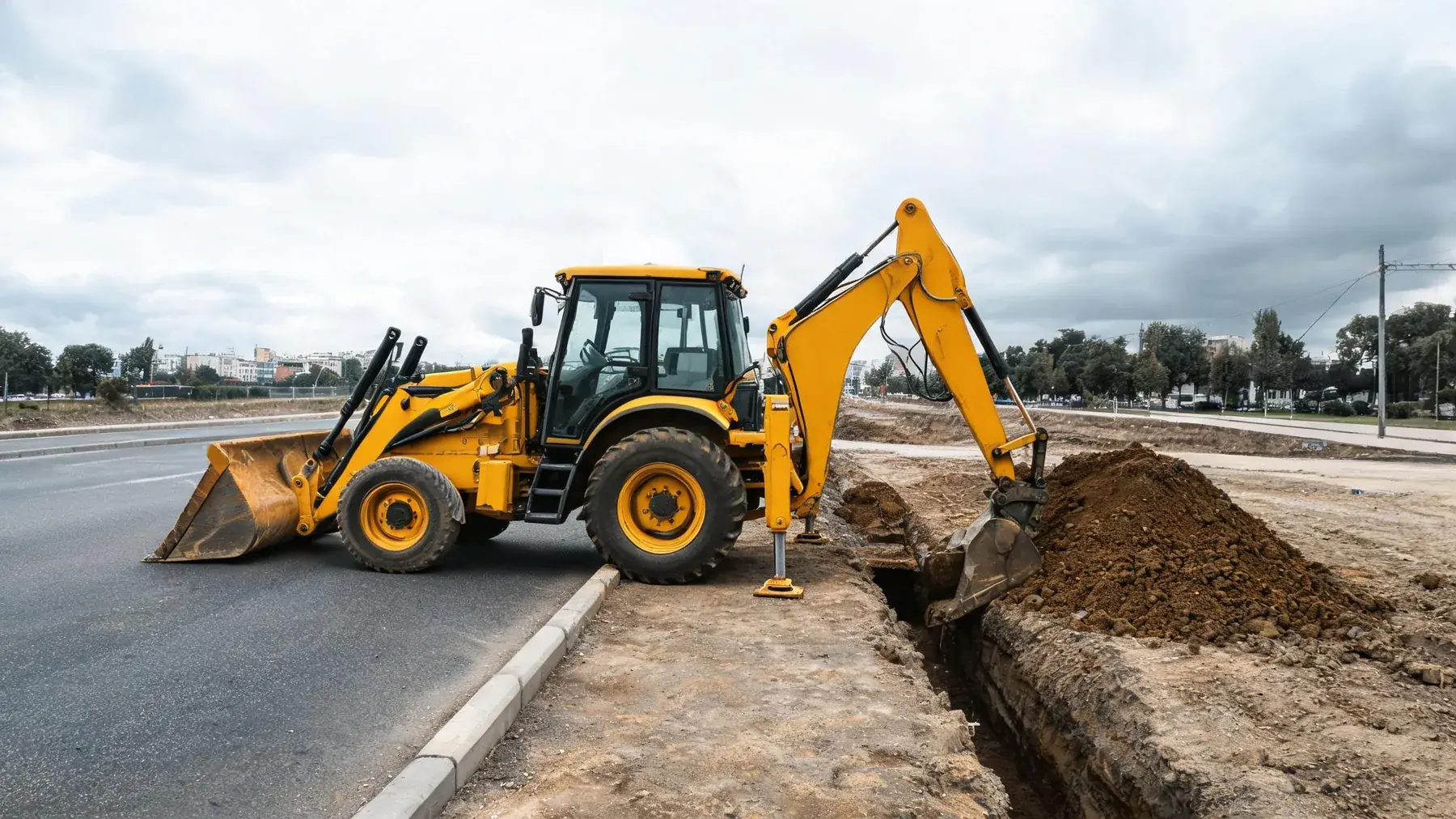
A wheel loader has one attachment at the front and is built around repeatable, high-volume loading. A backhoe loader carries a front bucket and a rear excavator arm on the same chassis, so it can dig, load, trench, break and travel between jobs without a trailer.
That flexibility has a cost. The rear arm adds weight and complexity, the front bucket is smaller than a dedicated loader's, and the machine is a compromise in both roles. The question is whether your work is variable enough to need that compromise.
Side-by-side comparison
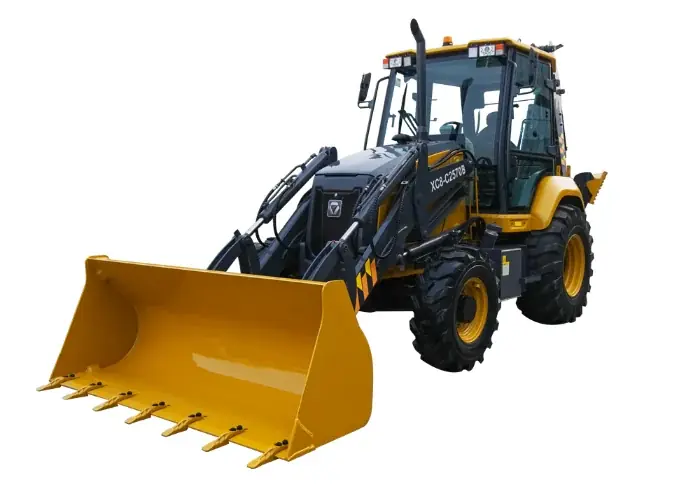
| Factor | XC8-C2570 backhoe loader | XC938 wheel loader |
|---|---|---|
| Operating weight | 7,600 kg | 10,400 kg |
| Front bucket | 1.0 m³ | 1.8–3.0 m³ |
| Rated load | 2,500 kg (front) | 3,500 kg |
| Dig depth | 4,440 mm (5,698 mm with extender) | Not applicable |
| Road speed | Up to 38 km/h | 13–17 km/h in the yard |
| Loading output | Moderate | High |
| Attachments | Breaker, auger, ripper, compactor, forks | Buckets, forks, clamps, sweeper |
| Transport | Self-propelled on road | Low-bed or flat rack |
When a backhoe loader wins
- Utility and municipal work. Water, power, telecom and drainage contractors dig short trenches in different locations every day. The 38 km/h road speed removes the low-bed from the equation.
- Mixed small projects. One machine can excavate a foundation, load the spoil, backfill, compact and lift pallets.
- Rental fleets. A backhoe loader is the most requested single machine on small civil sites because it does everything adequately.
- Restricted access. At 7.6 t and about 2.3 m wide, it reaches sites a 10 t loader cannot.
The XC8-C2570 adds a 1.0 m³ front bucket, a 74 kW Yuchai engine and a rear arm with extending dipper — deep enough for 4.4 m trenches and fast enough to load a 10 t tipper in a few passes.
When a wheel loader wins
- Aggregate yards and ready-mix plants. Loading is continuous and the machine never leaves the pad. Productivity per hour is the only metric.
- Quarry and port duty. Big buckets, high breakout force, 10-second cycles and the stability to work a 4 m stockpile.
- Fleets with 25–40 t trucks. A loader that fills the truck in four passes keeps the haul cycle moving; a backhoe loader cannot.
- Attachment-heavy work. Forks, clamps, sweepers and high-dump linkages are more effective on a dedicated loader frame.
Cost per hour, not purchase price
A backhoe loader typically costs less to buy than a comparable wheel loader, and it avoids low-bed transport. But if the job is bulk loading, its output per hour is roughly half. Two backhoe loaders may be needed to match one 3.5 t loader, which doubles operators, fuel and maintenance points.
Do the arithmetic on tonnes per hour, not on the invoice: fuel per tonne, tyre cost per tonne, operator cost per tonne. In pure loading duty the wheel loader usually wins by a wide margin. In mixed trenching and loading work, the backhoe loader wins on mobilisation cost.
The verdict
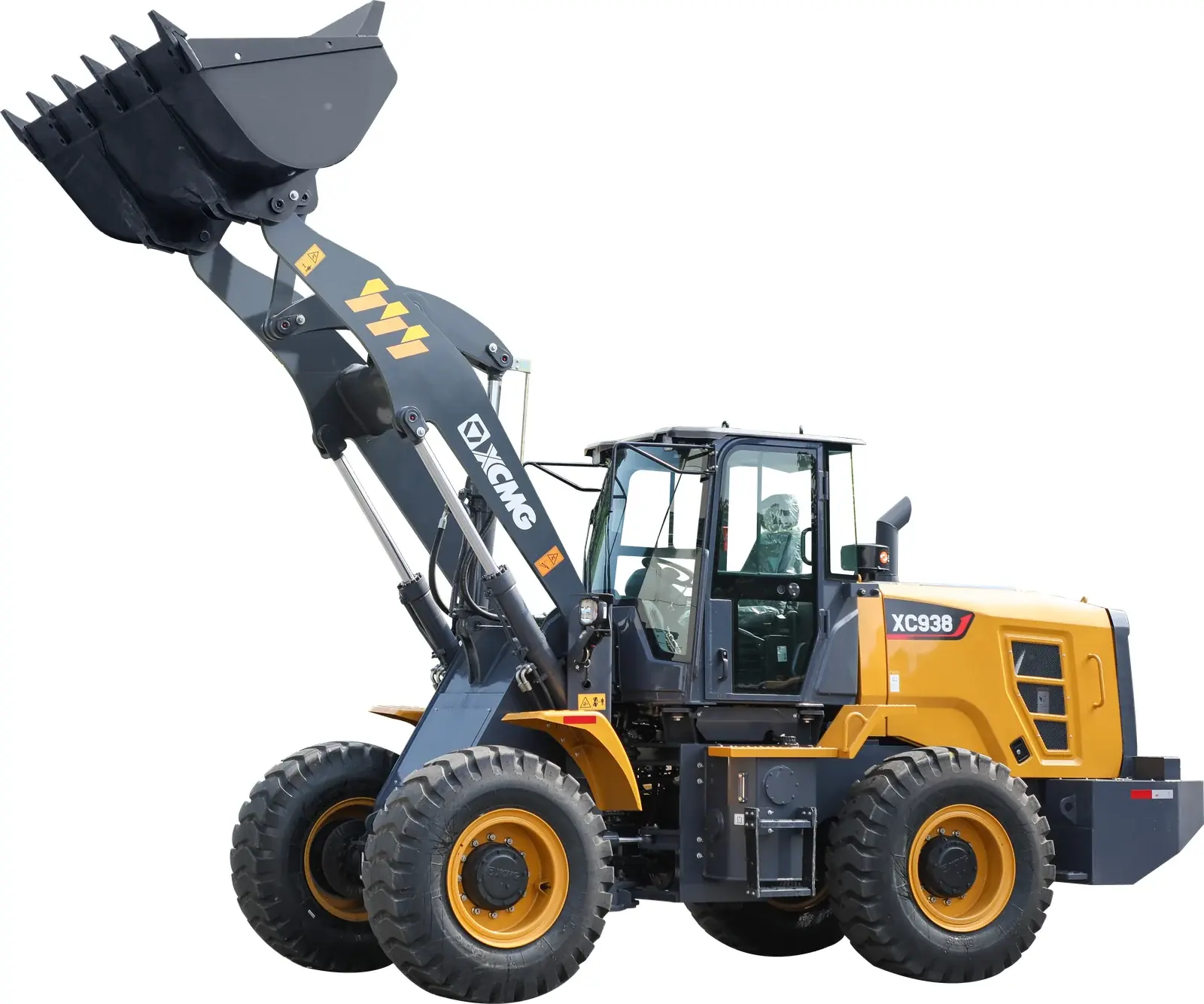
If more than 60% of your machine hours are loading trucks, stockpiles or hoppers, buy a wheel loader — start with the XC938 and move up to the XC958 if trucks are over 30 t.
If your work is trenching, utility repair, small foundations and mixed site tasks spread across a city or region, the XC8-C2570 backhoe loader will earn more days per year.
Plenty of contractors eventually own both: a backhoe loader for service work and a loader for production. If you can only buy one, count the hours first.
Quick answers
It can, but not continuously. With a 1.0 m³ front bucket a 20 t tipper takes 12–16 passes. That is acceptable for occasional loading and slow for a production yard.
A wheel loader has fewer systems and no rear arm, so routine maintenance is simpler. A backhoe loader has more pins, bushes and hydraulics to inspect, but its components are generally smaller and cheaper.
Related models
Need this sized for your site?
Send the material, truck size and destination port. We will recommend the model and configuration in writing.