
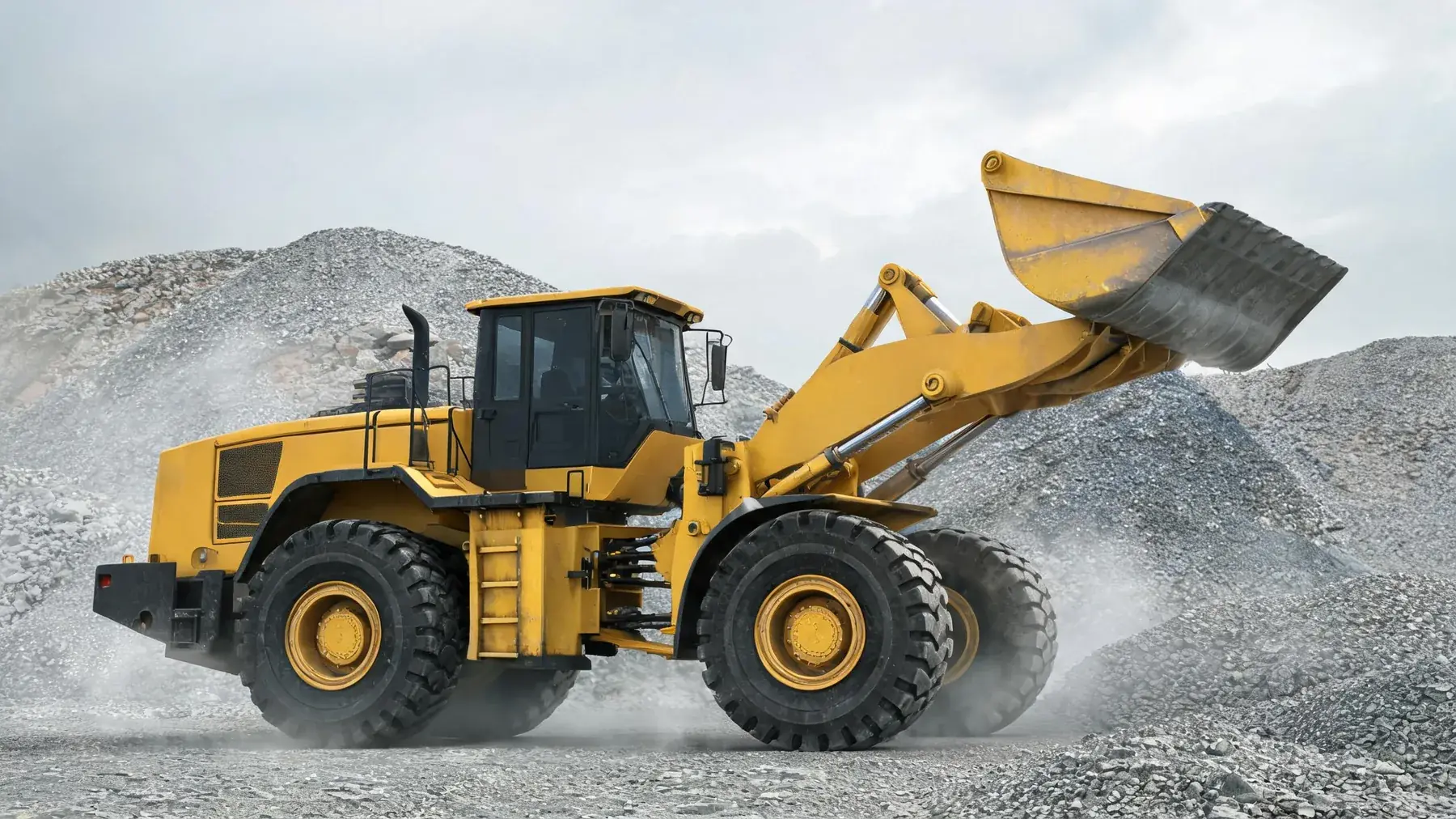
XCMG Wheel Loaders Compared: XC936, XC938, XC958, ZL50GN and LW300KN
Five XCMG loaders from 3 t to 5.5 t, compared on the numbers that decide output: bucket, breakout force, weight and cycle time.
XCMG builds several overlapping wheel loader families. The five models we supply most often to Africa and the Middle East cover 3 t to 5.5 t rated load and three different design philosophies: compact yard machines, a mid-weight all-rounder, and two production loaders.
The range at a glance
| Model | Rated load | Bucket | Power | Operating weight | Breakout |
|---|---|---|---|---|---|
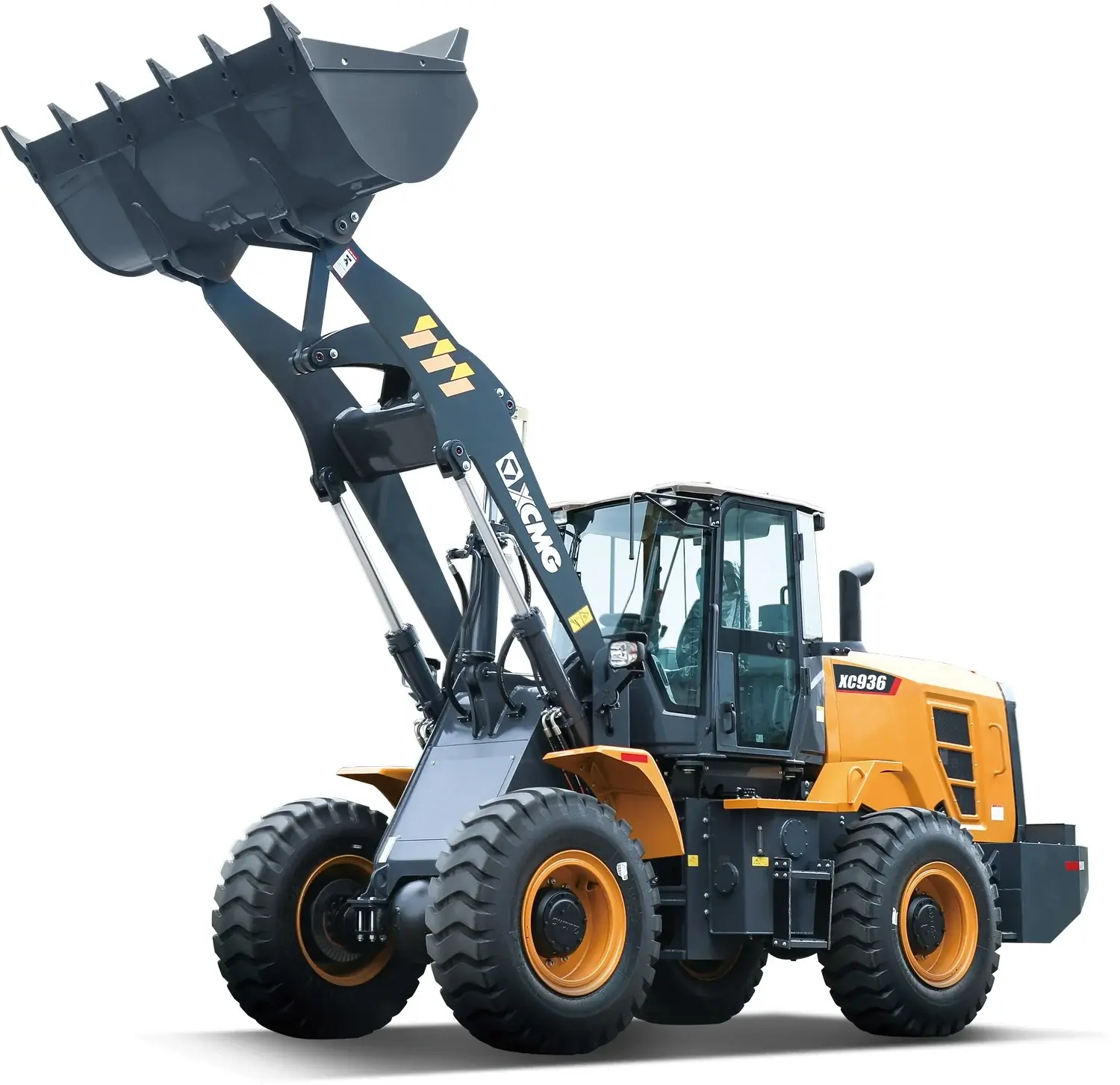
| XC936 | 3,000 kg | 1.8–2.1 m³ | 92 kW | 10,300 kg | — |
| LW300KN | 3,000 kg | 1.5–2.5 m³ | 92 kW | 10,900 kg | 130 kN |
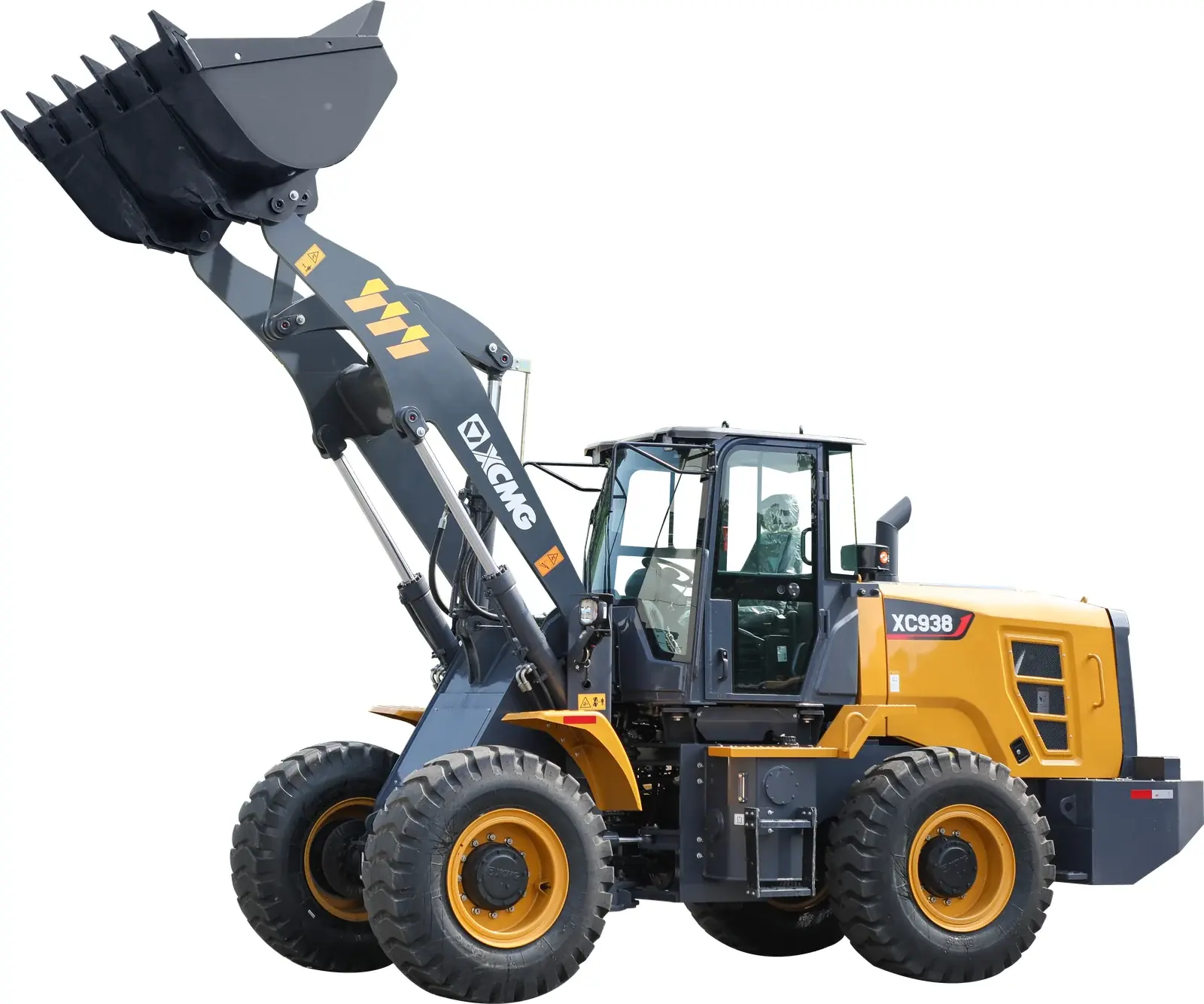
| XC938 | 3,500 kg | 1.8–3.0 m³ | 92 kW | 10,400 kg | 125 kN |
| ZL50GN | 5,000 kg | 2.5–4.5 m³ | 162 kW | 17,300 kg | — |
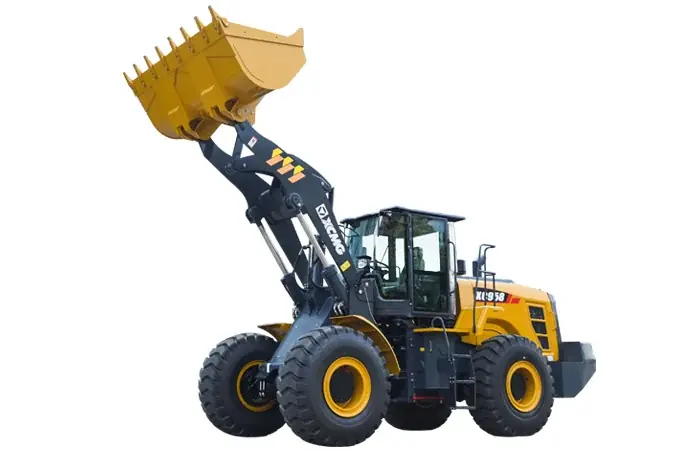
| XC958 | 5,500 kg | 3.0–3.2 m³ | 162 kW | 16,950 kg | 180 kN |
All five use Weichai engines, ZF-style power-shift transmissions and wet disc brakes. The differences that matter in the field are weight distribution, hydraulic output and how the bucket is matched to the linkage.
3 t: XC936 vs LW300KN
These two machines look similar on paper and behave differently on site.
The XC936 is the newer platform with a 3,000 kg rated load and a 1.8–2.1 m³ bucket. It is lighter and quicker in tight yards, and the cab layout is more modern. It suits municipal work, small aggregate yards and farms where the machine also does forks and sweeper duty.
The LW300KN is the higher-penetration machine: 10,900 kg operating weight and a 1.5–2.5 m³ bucket range. Its 130 kN breakout force is 4% higher than the XC938's despite being a smaller class, because the linkage is set up for digging rather than pure loading. In hard gravel and compacted spoil, the LW300KN out-digs its class.
Choose the XC936 for a modern, lighter yard machine. Choose the LW300KN when the material is packed and you need breakout force more than bucket volume.
3.5 t: the XC938
The XC938 is the widest-selling size in the range and the easiest to justify. A 3,500 kg rated load, 1.8–3.0 m³ bucket options, 125 kN breakout and a 2,900 mm wheelbase hit the middle of almost every application: ready-mix plants, aggregate yards, general construction, roadworks.
Its advantage is not a single headline number but balance. It is heavy enough to stay stable with a full 3.0 m³ bucket in light material, light enough to travel on a standard low-bed, and narrow enough for urban sites. If you are buying your first loader and cannot inspect the job in person, this is the lowest-risk choice.
5 t: ZL50GN vs XC958
The ZL50GN is the classic 5 t platform: 162 kW WD10 engine, 2.5–4.5 m³ buckets, 17,300 kg and a very simple mechanical layout. Its advantage is cost of ownership. Parts are everywhere, every mechanic has worked on one, and the machine tolerates rough fuel and dusty conditions.
The XC958 is the higher-output machine: 16,950 kg, 3.0–3.2 m³ standard bucket, 180 kN breakout and faster hydraulics — 5 s boom lift, 10 s total cycle. It is built for quarry faces, coal yards and ports where the loader never stops.
Choose the ZL50GN for general earthmoving, sand and gravel, and fleets that value simplicity. Choose the XC958 when tonnes per hour and cycle time drive the business case.
How to choose between them
- Define the material. Density decides whether a 3.2 m³ bucket is 5 t or 6.5 t of payload.
- Measure the truck. Aim for 4–5 passes. More than 6 means the loader is undersized.
- Measure the site. Gate width, turning space and stockpile height decide the maximum practical size.
- Check the transport. Two 3 t units per 40 ft flat rack can be cheaper than one 5.5 t unit plus a low-bed.
- Check the parts chain. Ask which filters, hoses and pins are locally available before you choose the engine variant.
Send us your material, truck size and site constraints and we will return a written recommendation with bucket, linkage and shipping plan.
Quick answers
The XC958 for continuous quarry loading with 30–40 t trucks, or the ZL50GN where the quarry runs mixed duty and simplicity matters more than cycle time.
Yes, both are 3 t rated load, but the LW300KN is heavier (10,900 kg vs 10,300 kg) and has a higher breakout force, which suits harder digging.
Related models
Need this sized for your site?
Send the material, truck size and destination port. We will recommend the model and configuration in writing.